




TONY’S TAKE – THOUGHTS ON THE 2025-26 BUFFALO SABRES AND THE STANLEY CUP PLAYOFFS

by Tony Fiorello

If anyone had told me in early December 2025 that the Buffalo Sabres would not only break their 14-year playoff drought but win their division for the first time since 2010, I would have laughed and questioned their sanity.
Being mired in practically hockey hell for a decade and a half will do that to a man. Back in the spring of 2011, I was in my penultimate year of college and was used to playoff runs practically every spring. Never could I have predicted the ineptitude that would occur at 1 Seymour H Knox III Plaza in downtown Buffalo that would nearly sap the love of the game out of Western New York and the Niagara Frontier.
But then something extraordinary happened. The group of prospects the Sabres had been accumulating for years, along with the veterans brought in to accentuate them, finally began to click. And not only did they start to win, they began to dominate teams.
What prompted this run of excellence is unclear. Whether Lindy Ruff’s message was finally beginning to resonate with the roster, the team maturing at the right time or the Sabres needing a wakeup call in the form of ex-general manager Kevyn Adams getting canned in favor of Jarmo Kekalainen is anyone’s guess (perhaps it’s a bit of all three factors). No matter what the main catalyst is, what can’t be denied is that this isn’t a flash in the pan – unlike some hot stretches the team had in the past (looking at you, 10-game winning streak in 2018-19).
Buffalo’s talents can be seen on a nightly basis. Three-time 40-goal scorer Tage Thompson and Rasmus Dahlin are finally getting their due as two of the NHL’s best players (Dahlin has been mentioned by some as a potential Norris Trophy candidate). Alex Tuch and Ryan McLeod are two-way dynamos, especially when killing penalties.
Josh Doan, Jack Quinn, Jason Zucker and Josh Norris – when healthy – have provided timely secondary scoring up front along with Bowen Byram and Mattias Samuelsson on the back end (Samuelsson is finally healthy after some injury-marred campaigns). Zach Benson, Peyton Krebs and Beck Malenstyn give the Sabres some snarl and grit and the trio of Ukko-Pekka Luukkonen, Alex Lyon and Colten Ellis have been reliable in net. Luukkonen, in particular, is finally starting to deliver on the promise that he showed when Buffalo drafted him in 2017.
This collection of talent coming together at the right time has turned the Sabres from a laughingstock into one of the league’s best rosters. It also has helped Buffalo regain its status as one of the world’s best hockey cities, as KeyBank Center started a sellout streak in the spring and civic pride in the Blue and Gold has once again swelled up.
Whether or not this dream of a season can be continued in future years is a debate for another day. The question now is how far into the postseason will Buffalo take this run. Will they flame out in the first round as their relative inexperience in the playoffs begins to show? Can they win a round or two and add icing onto the proverbial cake? Or could they surpass anyone’s wildest dreams and even win the Stanley Cup?
No one knows. All this corner knows is, to paraphrase a sign a Bills fan once brought to a game, “The Sabres are back. Deal with it, America.”
With that in mind, here are my thoughts on how Round One of the Stanley Cup Playoffs could shake out:
EASTERN CONFERENCE

Buffalo Sabres vs. Boston Bruins – Sabres in six. This is the ninth time these division rivals have met in the Stanley Cup Playoffs (with Boston winning six of the prior eight, Buffalo’s only series wins came in 1999 and 1993) and while Jeremy Swayman could steal a win or two for Boston – and David Pastrnak, Morgan Geekie, Pavel Zacha and Charlie McAvoy are quality offensive threats – I don’t think the Bruins have the depth that Buffalo has up front and they don’t have quite as good a defense corps as the Sabres do.
While the two teams are comparable in goals for (Buffalo fifth, Boston 10th) and goals allowed (Buffalo 10th, Boston 14th), special teams have been uneven. Boston’s penalty kill has been terrible all season (24th) and their power play, which was terrific through the first four months of the season, has gone downhill since the Olympic break. The Sabres, meanwhile, were just 20th on the man-advantage but were fifth in killing penalties.
What could be the difference here is how disciplined coach Marco Sturm’s crew is – if someone like Nikita Zadorov doesn’t take stupid penalties (which has been his M.O. for most of his career), the Bruins might have a chance. If not, Buffalo could improve their power play at the right time and move on to the second round.

Tampa Bay Lightning vs. Montreal Canadiens – Lightning in seven. Both teams are stacked up front (Nikita Kucherov, Brayden Point, Brandon Hagel and Jake Guentzel are standouts for Tampa and Nick Suzuki, Cole Caufield, Juraj Slafkovsky and Ivan Demidov are for Montreal) and on the back end (Victor Hedman and Darren Raddysh for Tampa and Lane Hutson, Noah Dobson and Mike Matheson with the Habs), so anything could happen in this rematch of the 2021 Stanley Cup Final.
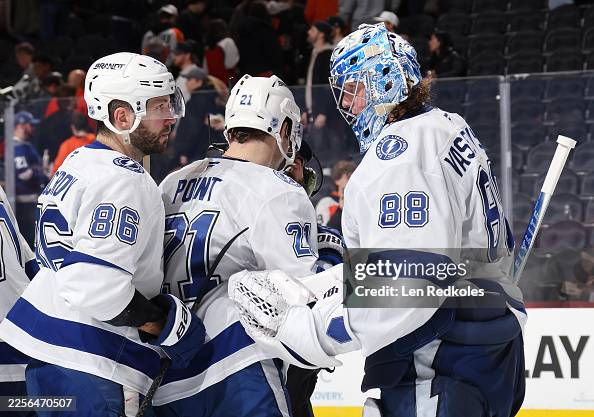
At the end of the day, I think what will give the Bolts the edge is coaching and goaltending. Jon Cooper is one of the league’s best bench bosses and ditto Andrei Vasilevskiy in net, and the Canadiens haven’t gotten consistent play in goal all season.

Pittsburgh Penguins vs. Philadelphia Flyers – Penguins in six. While guys like Travis Konecny, Trevor Zegras, Sean Couturier, Owen Tippett, Christian Dvorak, Travis Sanheim and coach Rick Tocchet have helped the Flyers get hot since the beginning of March, they’re a relatively young bunch – Zegras and other key contributors Matvei Michkov, Jamie Drysdale and Cam York are all 25 and younger, and their special teams have stunk all season (not to mention they were just 21st in scoring and employ the NHL’s worst power play). In goal they’re held down by ex-Calgary Flame Dan Vladar.

Meanwhile new Pens head coach Dan Muse has turned back the clock for Sidney Crosby, Evgeni Malkin, Erik Karlsson and company as Pittsburgh has boasted one of the league’s most explosive offenses, but their goaltending (Stuart Skinner is the starter) and defensive play (bolstered by the aging Kris Letang) have faltered – evidenced by placing just 24th in goals allowed. I’m betting the Pens’ experience wins out here.
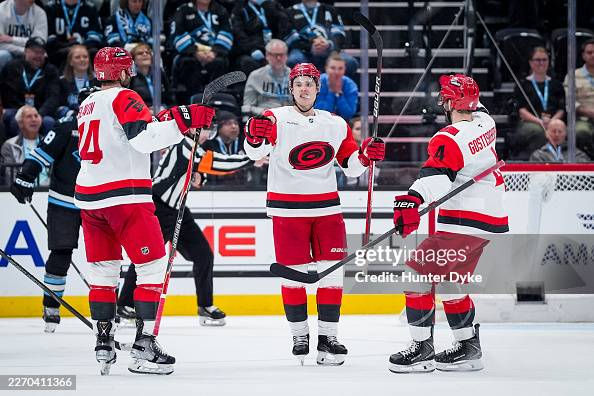
Carolina Hurricanes vs. Ottawa Senators – Hurricanes in six. Both teams are stellar on the power play but the two biggest differences between Carolina and Ottawa are the penalty kill (the Hurricanes were 11th and the Senators just 29th) and goaltending. While neither Linus Ullmark nor rookie Brandon Bussi have produced sparkling save percentages, Bussi had a goals-against-average of 2.47 and Ullmark’s was only 2.73.

The ‘Canes are paced by the usual suspects up front (Sebastian Aho, Andrei Svechnikov, Seth Jarvis) along with newcomer Nikolaj Ehlers and Shayne Gostisbehere averaged nearly a point per game from the blue line (Jaccob Slavin, the team’s best defender, has had an injury-marred season). Meanwhile the Sens’ best scoring threats among their forwards are Brady Tkachuk, Tim Stutzle and Drake Batherson, and Jake Sanderson and Thomas Chabot are the headliners on the blue line. Coach Rod Brind’Amour’s smothering defensive system will win out here against Travis Green’s bunch.
WESTERN CONFERENCE

Colorado Avalanche vs. Los Angeles Kings – Avs in a sweep. While Los Angeles can hang their hats on a few items – they were seventh in goals allowed and retiring captain Anze Kopitar and veterans Drew Doughty, Adrian Kempe, Artemi Panarin, Brandt Clarke, Quinton Byfield and Darcy Kuemper are quality NHL players – this year’s version of the Kings are one of the worst teams to ever reach the postseason. The oldest team in the NHL in terms of average age (31.1 years), L.A. had just 22 regulation wins which are tied for the second-least in the league with the Chicago Blackhawks. They were also 29th in scoring, fifth-last with the man advantage and third-last on the penalty kill, and are missing Kevin Fiala as he’s out for the season with a leg injury.

On the other side of the coin, the Colorado Avalanche have been one of hockey’s best teams for years and are coming off a President’s Trophy-winning campaign as the NHL’s best regular season squad. Paced by all-world talents Nathan MacKinnon, Cale Makar and Martin Necas, they’re supported by solid players like Gabriel Landeskog, Brock Nelson, Brent Burns, Devon Toews, Nazem Kadri, Valeri Nichushkin, Artturi Lehkonen and the pair of Scott Wedgewood and Mackenzie Blackwood in goal. Jared Bednar’s Avs accomplished the rare feat of leading the NHL in both goals scored and goals allowed and had the league’s best penalty kill, however they were curiously just 27th on the power play.

Dallas Stars vs. Minnesota Wild – Stars in seven. These two division rivals meet again in the playoffs, and they’re also two of the game’s best outfits. The Stars, who have reached four Western Conference Finals (including three in a row) and a Stanley Cup Final in the last six years, are led by Jason Robertson, Wyatt Johnston, Mikko Rantanen, Miro Heiskanen, Matt Duchene, Roope Hintz, Jamie Benn and Thomas Harley (Tyler Seguin is out for the season with a knee injury) and were ninth in scoring (second on the power play) and second in goals allowed (13th on the penalty kill). Jake Oettinger is one of the game’s upper-echelon goaltenders.
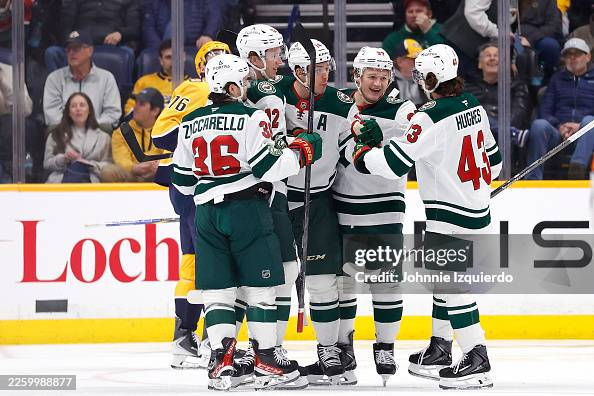
Minnesota, meanwhile, has been knocking on the door for a few years but hasn’t been able to break through in postseason play. Some of hockey’s most talented athletes in Kirill Kaprizov, Quinn Hughes, Matt Boldy, Mats Zuccarello and Brock Faber call the State of Hockey home and have helped the Wild finish 10th in scoring (third on the power play) and fourth in goals against (16th on the penalty kill). Jesper Wallstedt and Filip Gustavsson have split duties in the crease, and while this could be the year the Wild break through I believe Dallas’ experience wins out here.

Edmonton Oilers vs. Anaheim Ducks – Oilers in five. Edmonton continues to blossom in the Connor McDavid/Leon Draisaitl era, and the all-world duo isn’t doing it alone. With Zach Hyman, Ryan Nugent-Hopkins, Adam Henrique and Jack Roslovic in tow, the Oilers have good secondary scoring threats as well. Mattias Janmark, Vasily Podkolzin, Trent Frederic and Kaspari Kapanen provide grit on the team’s bottom-two lines.
Edmonton is held down on the rear by defenders Evan Bouchard (one of the league’s best scoring threats from the blue line) and Mattias Ekholm. Darnell Nurse, Jake Walman, Ty Emberson and Connor Murphy give the team decent play in their own zone. Ex-Penguin Tristan Jarry, Connor Ingram and Calvin Pickard have been up-and-down in the net for head coach Kris Knoblauch and general manager Stan Bowman.
The Oilers are back to employing an elite power play. Best in the league, they were just 12th in that category a year ago and were 20th on the penalty kill in 2025-26 while sixth in scoring but just 25th defensively.

Anaheim is back in the playoffs for the first time in eight years and has accumulated some talented player during their rebuild. 40-goal scorer Cutter Gauthier, Leo Carlsson, Beckett Sennecke, Mason McTavish and Jackson LaCombe are some of the NHL’s best young guns, and are accentuated by veterans who have been there and done that. A few of those names include Troy Terry, Chris Kreider, Mikael Granlund, Jacob Trouba, Alex Killorn, John Carlson and captain Radko Gudas. Lukas Dostal has emerged as coach Joel Quenneville’s starter in net.
The Ducks, however, have limped into the postseason losing eight of their last 10 and are a bit too green for a head-to-head matchup with a team coming off back-to-back trips to the Stanley Cup Final. 13th in scoring, Anaheim is fourth-worst in defending, 27th on the penalty kill and 23rd on the power play.

Vegas Golden Knights vs. Utah Mammoth – Vegas in six. The firing of Cup-winning coach Bruce Cassidy in exchange for veteran John Tortorella has seemed to light a fire underneath the Golden Knights, as they rallied to win their division by winning seven of their last 10. Backed by excellent talent in Mitch Marner, Mark Stone, Jack Eichel, Ivan Barbashev, Pavel Dorofeyev, Shea Theodore, Tomas Hertl, Noah Hanifin and Rasmus Andersson, Vegas is typically in the thick of things as a contender year in and year out. Middle of the pack in goals scored and allowed, they also have special teams units that are ranked in the league’s top-10 and Carter Hart, Akira Schmid and Adin Hill have all gotten playing time in goal.

Utah, on the other hand, had been an underachieving bunch going back to their days in Arizona but have finally reached the playoffs in a new city. 10th in goals scored and allowed, they’re backed by six different players who have all recorded 25-goal campaigns (Dylan Guenther with 40, the criminally-underrated Clayton Keller and Nick Schmaltz and solid supporters Lawson Crouse, Logan Cooley and JJ Peterka) and Mikhail Sergachev, John Marino and Mackenzie Weegar lead a sound defense corps. Karel Vejmelka is the Mammoth’s starter in the crease.


Comments